Guide 03
What to check before you ring.
Some heating faults are a five-minute fix you can do yourself, and some need an engineer the same day. Telling them apart is worth knowing — and if it is the second kind, the notes below make the visit shorter.
Before anything else
If you can smell gas, do not start diagnosing. Ring the National Gas Emergency Service on 0800 111 999, turn the gas off at the meter if you can reach it safely, open the windows, do not touch any electrical switches and get everyone out. Never remove a boiler case, and never work on gas yourself — it is illegal as well as dangerous.
No heating and no hot water at all
Check — Check the obvious three before anything else: is there power to the boiler (a tripped RCD or a switched-off fused spur behind the unit), is the programmer actually calling for heat, and is the gas on — try a gas hob. On a prepayment meter, check the credit.
What it usually means — If the boiler has power, the programmer is calling and the gas is on but nothing fires, it is usually ignition, a gas valve, a fan or a locked-out safety device. That is a call-out.
The boiler keeps locking out
Check — Note the fault code on the display before you reset it — photograph it. Reset once. If it locks out again within the day, stop resetting and ring; repeated resets on a genuine fault are not harmless.
What it usually means — The code is the diagnosis. Send it on WhatsApp and the right part is far more likely to be on the van. In winter, a frozen condensate pipe is the single most common cause and can often be thawed safely with warm — never boiling — water.
Pressure keeps dropping
Check — Look at the gauge, top it up to the figure on the boiler (usually around 1.2–1.5 bar cold), then write down the reading and check it in three days.
What it usually means — Water is going somewhere: a weeping joint, a failed expansion vessel, a pressure relief valve discharging quietly outside, or a pinhole in a radiator. Repeatedly topping up hides the fault and fills the system with fresh oxygenated water, which is what makes sludge.
Radiators cold at the bottom, hot at the top
Check — Feel across the radiator, and check whether it is one radiator or all of them. Check the thermostatic valve is not seized — take the head off and see if the pin moves.
What it usually means — One radiator is usually a seized valve or a balancing problem. All of them is magnetite sludge, and the answer is a power flush, inhibitor and a magnetic filter rather than another top-up.
Radiators cold at the top, hot at the bottom
Check — Air. Bleed the radiator with a key and a cloth, then re-check the system pressure and top it up if bleeding has dropped it.
What it usually means — If the same radiators need bleeding every few weeks, the system is making gas — usually corrosion, sometimes a leak drawing air in. Worth a look rather than a routine.
Banging, kettling or a new hum
Check — Note when it happens: on start-up, on hot water only, or continuously. Do not ignore it because the heating still works.
What it usually means — Kettling is normally limescale or sludge in the heat exchanger. A hum is often the pump. Both get worse and both are cheaper to deal with before they take the boiler with them.
Hot water lukewarm, or hot then cold
Check — On a combi, check whether it is worse on one tap than another — a blocked aerator on a kitchen tap fools people regularly. On a cylinder system, check the programmer and the immersion.
What it usually means — On a combi it is usually the diverter valve or a scaled plate heat exchanger. On a cylinder it is the coil, the zone valve, or a thermostat strapped to the wrong part of the cylinder.
Water dripping from an outside pipe
Check — Find out which pipe. A small copper pipe discharging near the boiler is the pressure relief valve; a plastic pipe from an unvented cylinder discharging through a tundish is a different, more urgent conversation.
What it usually means — Either way something is releasing pressure it should not have to. Ring — an unvented cylinder discharging is a safety device doing its job and should never be left running.
Four jobs, and the reasoning behind them
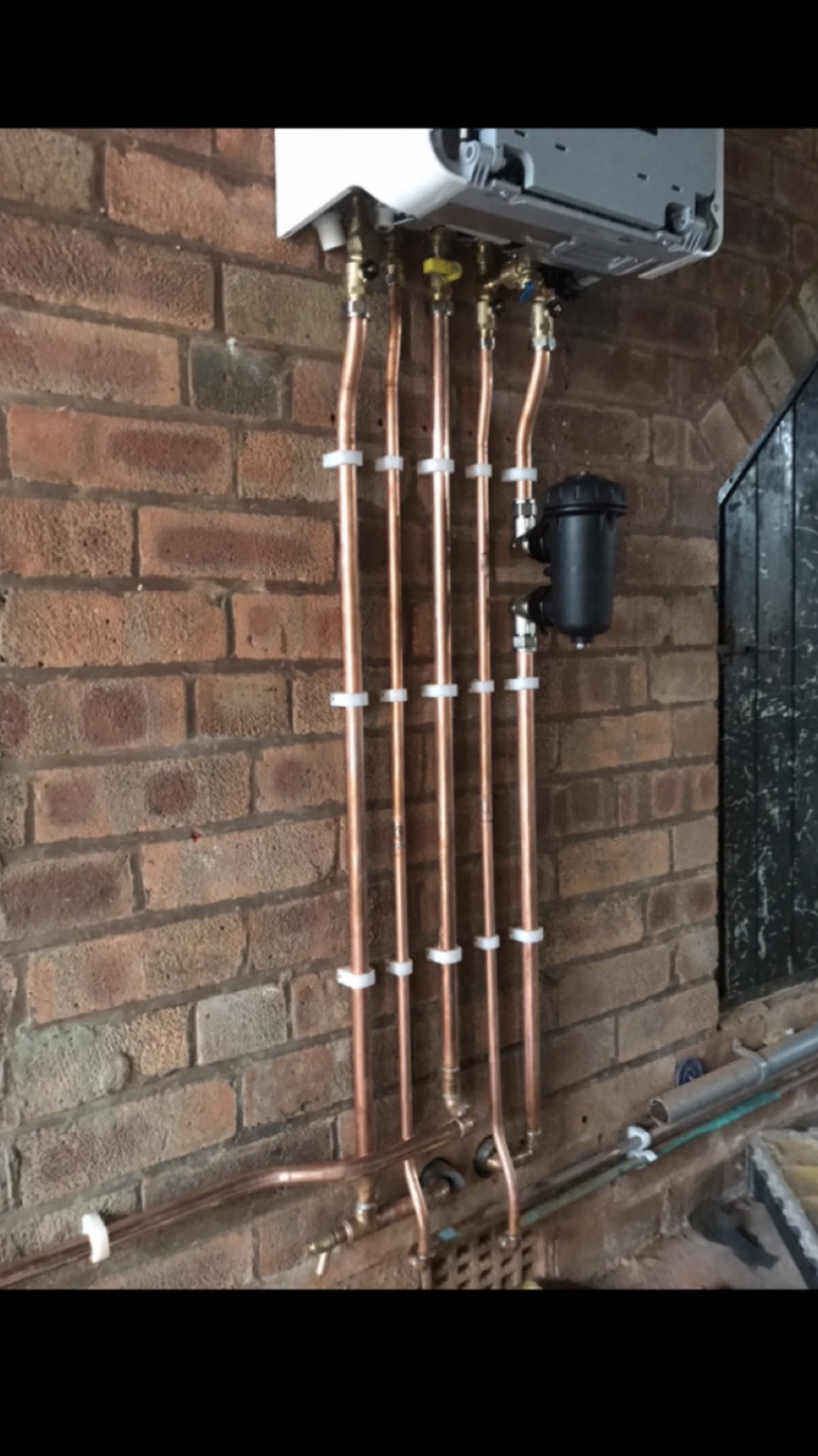
A system that loses pressure overnight
The situation — The gauge reads one and a half bar when you top it up and half a bar three days later. Most people top it up again and carry on, which hides the fault and slowly fills the system with fresh, oxygenated water — the fastest way to corrode radiators from the inside and produce the sludge that makes them cold at the bottom.
How we handle it — Pressure has to be going somewhere: a weeping joint under a floor, a failed expansion vessel, a pressure relief valve discharging quietly outside, or a pinhole in a radiator. The order of the checks matters, and so does the honesty of the answer — a re-charged expansion vessel is an hour's work, while a buried leak is a different conversation and a different quote.
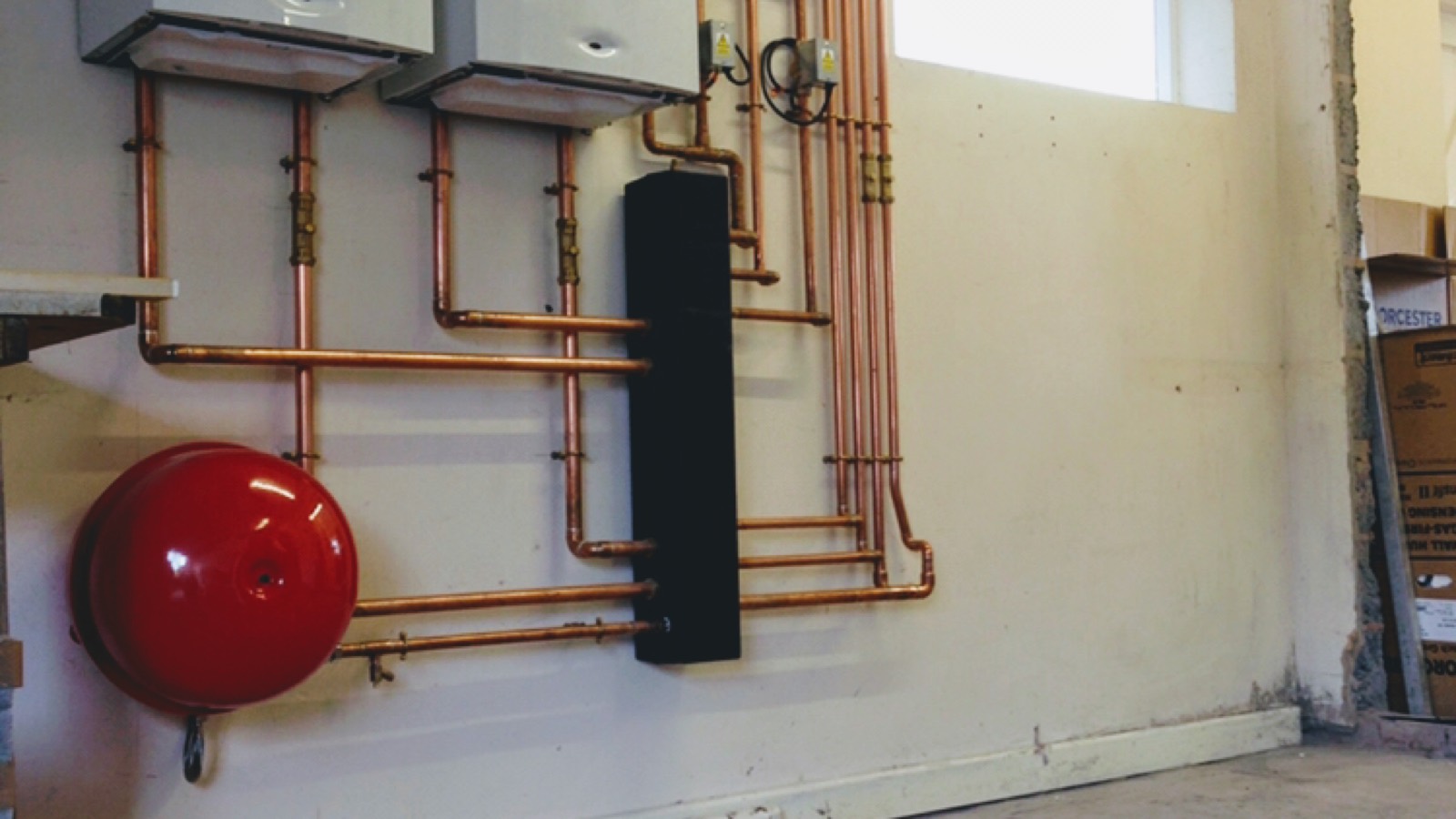
Radiators hot at the top, cold at the bottom
The situation — Classic magnetite. An older steel-and-copper system makes iron oxide continuously; it settles in the bottom of every radiator, collects in the heat exchanger and drags on the pump. The house never quite warms up, the boiler starts kettling, and fitting a new boiler onto the same pipework simply feeds the sludge straight into a brand new heat exchanger.
How we handle it — Clean the circuit before you spend money on the appliance. A power flush pushes cleanser round under pressure to lift the sludge out, the system is dosed with inhibitor afterwards, and a magnetic filter goes on the return to catch what it keeps making. Most manufacturers expect exactly this before a new boiler goes on — there is a filter in nearly every installation photograph on this site.
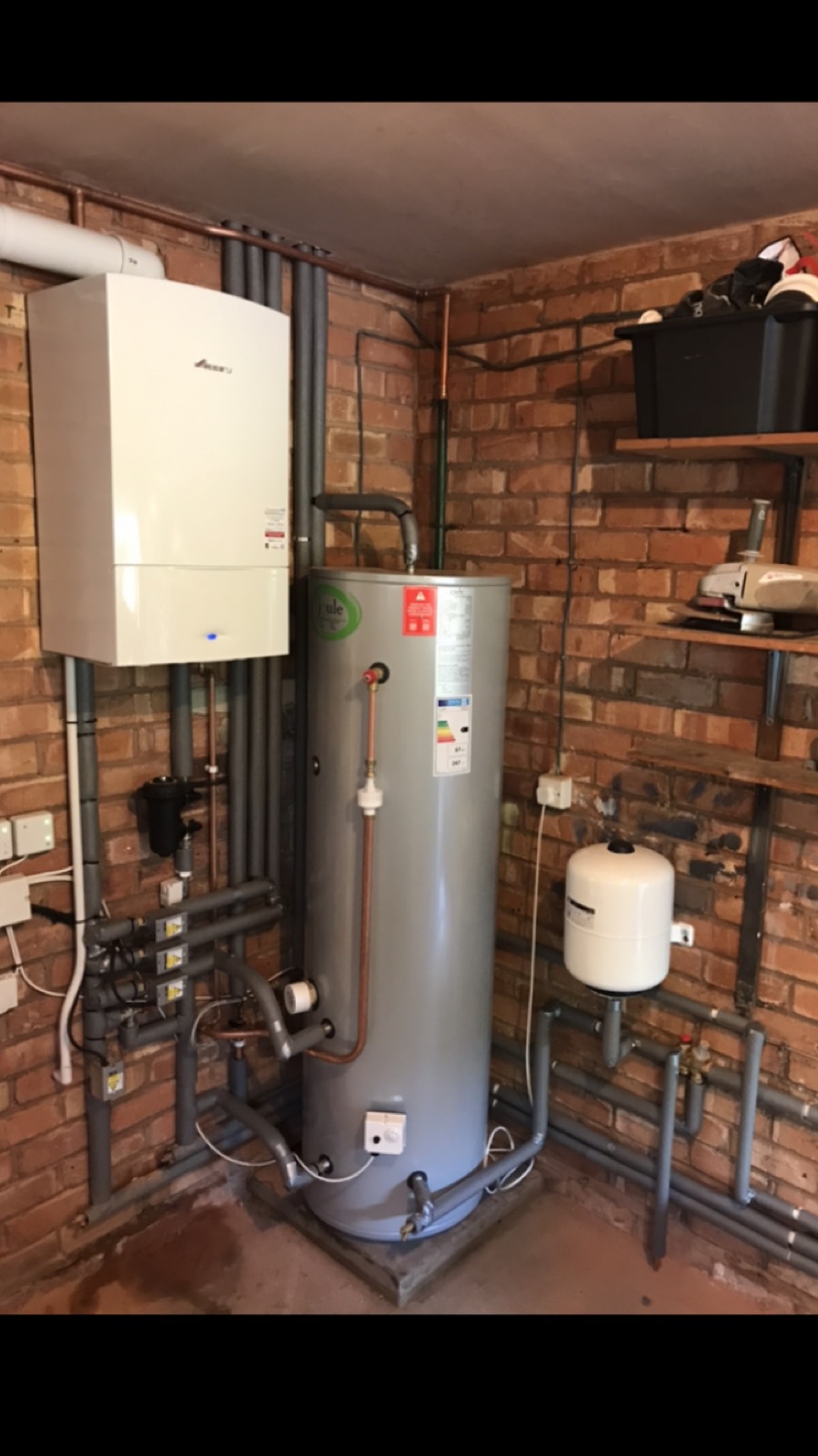
Two showers, and neither of them works properly
The situation — The usual disappointment in a larger Knowle or Dorridge house: a combi asked to do two bathrooms at once, or a tired vented cylinder with two metres of head behind it. No amount of adjusting the shower valve fixes either — the limit is the hot water system, not the tap.
How we handle it — The answer starts at the incoming main: what flow and pressure the house actually has, whether an unvented cylinder is viable, and where it can be sited with a legal discharge route. Unvented work carries its own safety requirements — expansion, temperature and pressure relief, and a tundish discharge that goes somewhere safe. Get that right and the second shower works; guess it and nothing else will.
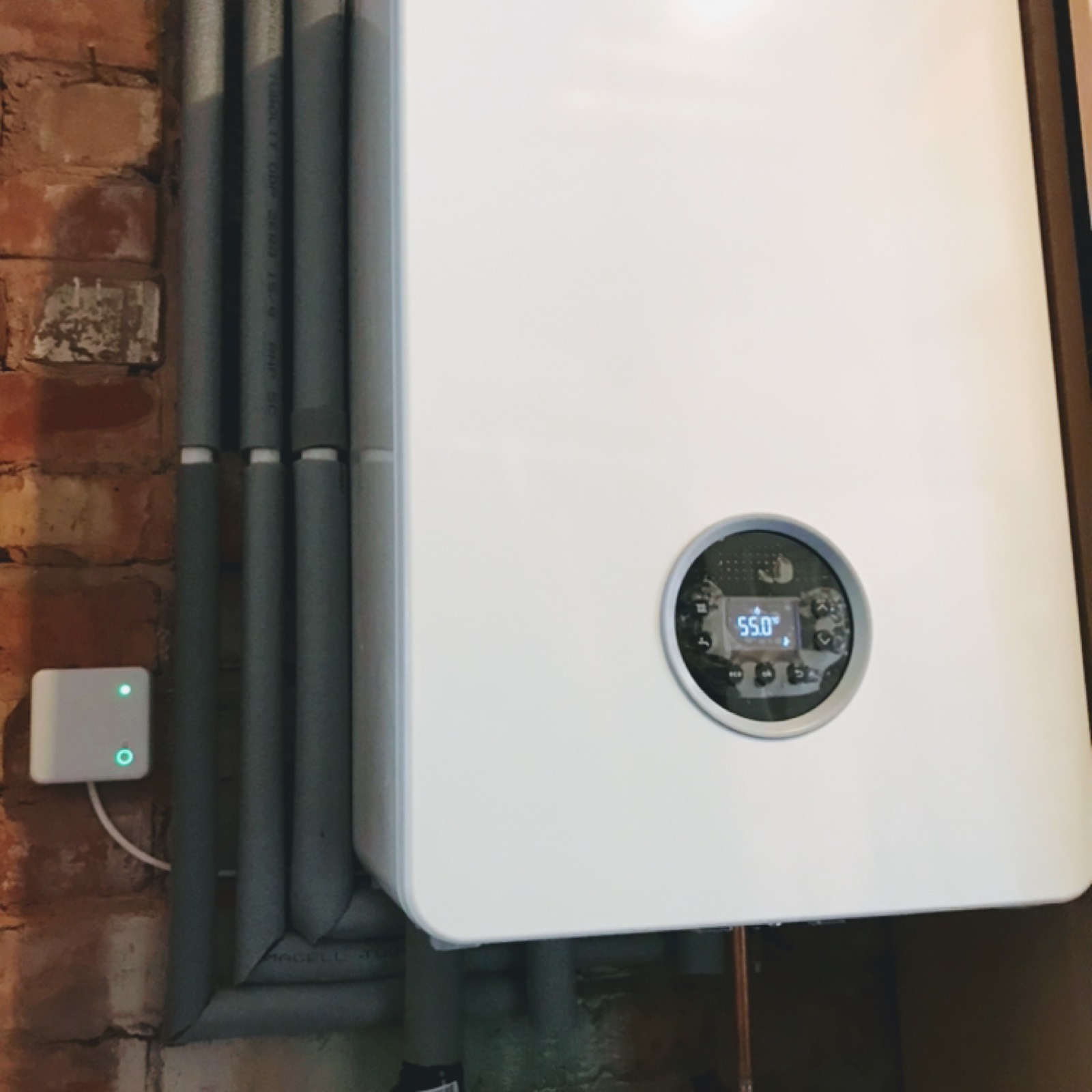
A new condensing boiler that never condenses
The situation — A modern boiler only reaches its advertised efficiency when the water coming back to it is cool enough for the flue gases to condense. Left on the factory default flow temperature — often 75 or 80°C — it spends the winter running hot, short-cycling and never condensing, and the bill looks nothing like the brochure.
How we handle it — Drop the flow temperature to around 55°C, balance the radiators so every one of them gives up its heat instead of racing, and set the controls to run longer and gentler rather than in short blasts. On a bigger house, zone it properly. It costs nothing but the engineer's attention at commissioning — and it is visible in the photograph: 55.0 on the display.
Still not right? Ring an engineer.
Photograph the fault code and the boiler's data badge and send them on WhatsApp first — it genuinely shortens the visit. Mon–Sat, 8am–5pm · Sunday 8am–12pm.